
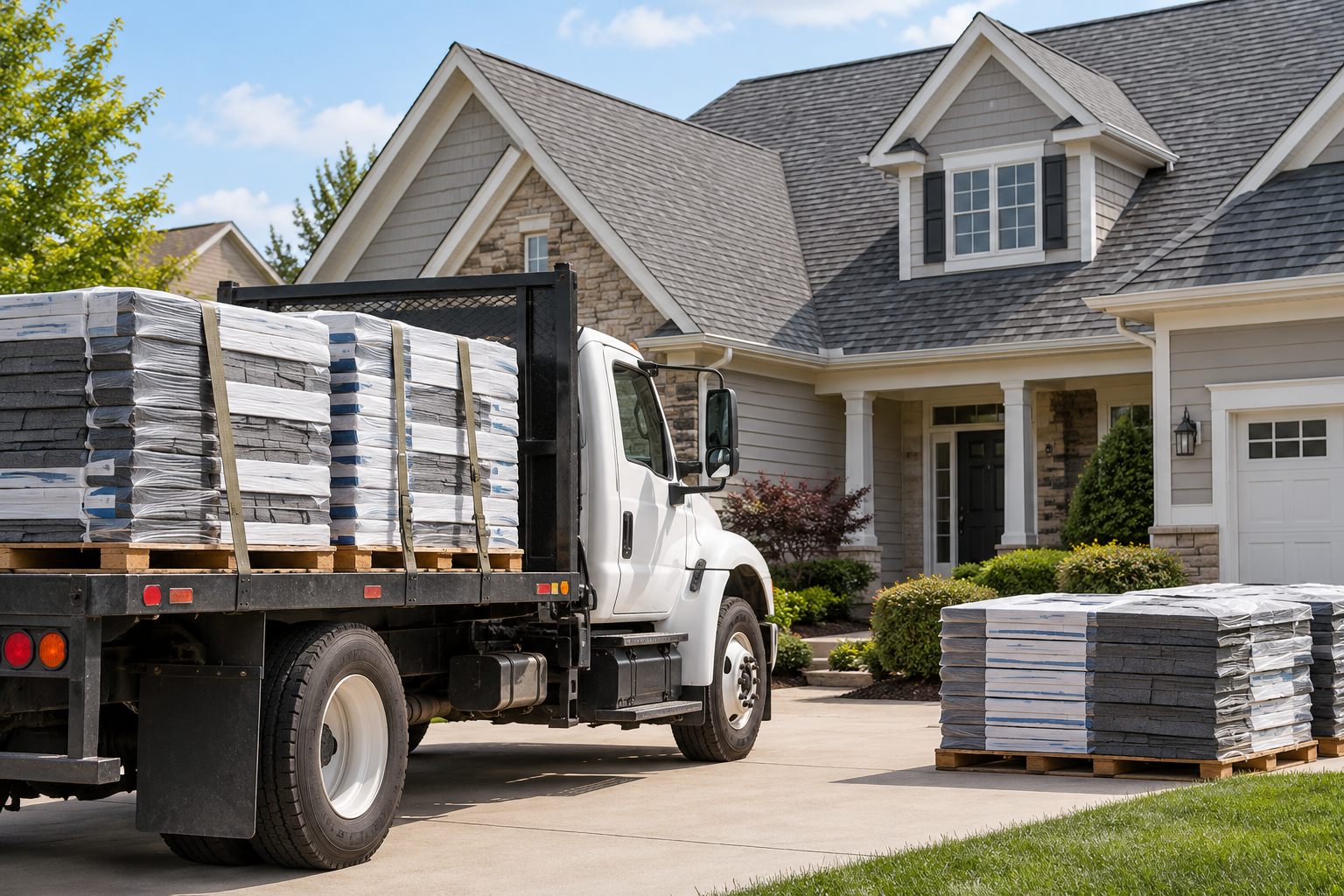
Fuel prices can affect roof pricing by increasing the cost of transporting materials, running vehicles and equipment, and hauling away old roofing. Broader petroleum-market changes can also influence asphalt-based materials. These pressures can affect residential and commercial projects, but a change at the pump does not translate into an equal percentage change in your roofing quote.
Where Fuel Costs Enter a Roofing Project
Material Deliveries and Debris Removal
Roofing materials have to reach the jobsite, even when they are manufactured in the United States. The U.S. Energy Information Administration explains that most products travel by trucks and trains with diesel engines.
For a roofing project, transportation may include shipments to a distributor, delivery to your property, and hauling away materials removed during tear-off. Higher fuel costs can put pressure on each of those trips. The effect depends on delivery distance, load size, and the number of trips required.
That means a domestically manufactured roof is still exposed to transportation costs. The location of the factory does not eliminate the fuel needed to get its products onto your building.
Petroleum-Based Roofing Materials
Fuel and roofing materials also share a connection further upstream. According to the Asphalt Roofing Manufacturers Association, asphalt is made by refining petroleum crude oils and is used in shingles, modified-bitumen membranes, and other roofing products.
This creates another potential source of cost pressure when petroleum markets change. However, gasoline is not an ingredient in a shingle, and its retail price is not a direct measure of roofing-material costs. The EIA identifies crude oil, refining, distribution, and taxes as separate components of diesel prices. Roofing products have their own production and pricing considerations.
The useful distinction: higher fuel prices can increase delivery expenses directly, while changes in the broader petroleum market may also affect the materials being delivered.
Vehicles and Equipment
Crews, tools, and supplies must travel to the property. Depending on the job, fuel-powered equipment may also be needed. Higher gasoline or diesel prices can therefore affect a contractor’s operating expenses beyond the material delivery itself.
How much that matters varies by project. A small repair and a large roof replacement require different amounts of travel, equipment use, and hauling.
Will Roof Prices Fall When Fuel Gets Cheaper?
Not necessarily, and not immediately. A lower pump price does not establish what a supplier paid for existing inventory or what a particular shipment will cost. It also does not reduce every other expense involved in installing a roof.
For the same reason, a fuel-price increase does not justify applying that same percentage increase to an entire project. Labor, roof size, access, material selection, and the condition of the existing roof still matter. Fuel is one part of the total.
Rather than trying to predict a roofing price from gas-station signs, ask for current pricing on the work your property actually needs.
What to Ask Before Scheduling
Keep the discussion focused on your project:
- Are delivery and debris-hauling costs included in the quoted total?
- How long is the estimate valid?
- If pricing changes before approval, which costs changed?
- What conditions, if any, could change the price after signing?
Ask for pricing terms in writing. If an estimate has expired, have it updated before relying on it for your budget.
Get Roofing Advice for Your Dayton Property
At Enterprise Roofing, we help homeowners and businesses throughout Dayton and the Miami Valley with roof repairs and replacements. We can assess your roof and discuss the work it needs so you can plan around your property’s condition and a current estimate.
Request a free quote from Enterprise Roofing or call our team at (937) 298-8664.
Nov. 03, 2026
Buying a Home in Dayton? The Roof Questions Smart Buyers Ask First
Oct. 19, 2026
How Fuel Prices Can Affect Roof Pricing
Oct. 05, 2026
Roof Repair or Replacement After Storm Damage? A Dayton Homeowner’s Insurance Guide

Sep. 22, 2026
Choosing the Right Roofing Material for Your Home
Sep. 08, 2026