
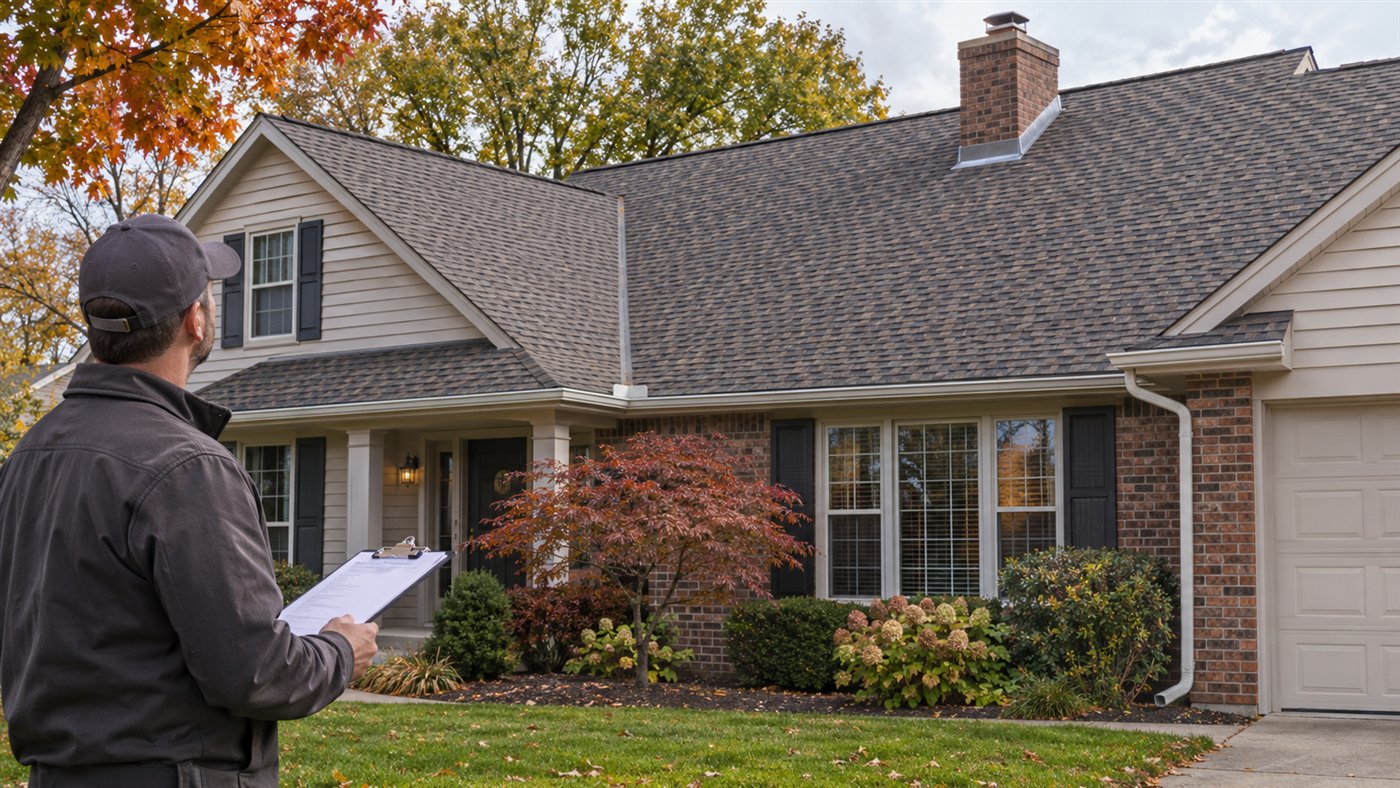
Before buying a Dayton home, ask how old the roof is, how many layers it has, what has been repaired, whether leaks or hazardous materials were disclosed, and what an independent inspection finds. Those answers can reveal immediate repair needs, future replacement costs, and whether the roof is ready for Ohio weather.
Start With the Roof’s Paper Trail
How old is the roof—and can the seller prove it?
Ask for the installation date, contractor invoice, permit records, material type, and warranty. If a warranty exists, find out whether it transfers to a new owner and what steps or fees are required.
Treat age as context, not a diagnosis. Two roofs installed in the same year can perform very differently because of workmanship, ventilation, maintenance, storm exposure, and materials. If the seller can only provide an estimate, ask a roofing professional to evaluate the roof’s present condition instead of relying on a guessed remaining lifespan.
What is the service history?
Request invoices and reports for every known leak, repair, storm claim, and inspection. Then ask:
- Where did water enter, and what caused it?
- Was the underlying cause corrected or only the symptom patched?
- Has the same area leaked more than once?
- Were damaged decking, flashing, or underlayment replaced?
- Who completed the work, and is any workmanship warranty still active?
A neat-looking patch does not explain what happened below the shingles. Documentation helps your inspector focus on areas with a history of trouble.
Has everything been disclosed?
Ohio law calls for a residential property disclosure form covering known conditions involving the roof, hazardous substances such as asbestos, and other material defects. However, the form reflects the owner’s actual knowledge; it is not a warranty or a substitute for an inspection. The Ohio Department of Commerce form expressly encourages buyers to obtain professional inspections.
Read the roof and water-intrusion sections closely. Compare the answers with repair invoices, insurance-related documentation the seller provides, and visible evidence in the attic. If information conflicts or a material question remains unanswered, discuss it with your real estate professional or attorney before your inspection or negotiation deadlines. This is practical guidance, not legal advice.
Inspect the Whole Roofing System
How many roofing layers are present?
Do not settle for “the shingles were replaced.” Ask whether the previous covering was torn off or covered over, and have the number of layers verified where possible. A second layer can hide the deck and complicate diagnosis. It can also increase the labor and disposal involved in a future replacement.
Ohio’s residential roofing code says recovering a roof is not permitted when the existing roof already has two or more applications of roof covering. The same provision bars recovering a water-soaked or seriously deteriorated base and certain materials, including asbestos-cement tile. Ask what the next replacement will require, not just what is visible today.
Are there signs of moisture or weak details?
A useful inspection looks beyond the broad shingle fields. It should evaluate accessible:
- Shingles or other roof covering for missing, lifted, cracked, or deteriorated areas
- Valleys, edges, and transitions
- Flashing around chimneys, walls, skylights, plumbing vents, and other penetrations
- Gutters and downspouts for drainage problems
- Roof deck and framing for sagging or deterioration
- Attic areas for staining, active moisture, and ventilation concerns
A general home inspection is valuable, but it is a visual review of accessible areas and cannot identify every concealed or latent defect. If the report flags roof concerns—or access was limited by height, slope, weather, or materials—request an assessment from an experienced roofing professional. Do not climb onto the roof yourself.
Could asbestos be present?
Some older roofing shingles, felts, mastics, and asbestos-cement products may contain asbestos, but age and appearance alone cannot confirm it. The EPA states that qualified laboratory testing is the only way to know for certain. It recommends testing suspect material when it is damaged or a planned renovation will disturb it, with sampling performed by a trained and accredited asbestos professional.
Ask whether the seller has prior test results, abatement records, or roofing documents identifying the material. Do not cut, break, or sample it yourself. If suspect material could affect a repair or tear-off, get professional guidance and understand the scope before closing.
Questions to Ask After the Inspection
Before the inspection period ends, ask the inspector or roofer for clear answers:
- Is there evidence of an active leak or recent moisture?
- Which findings need immediate work, and which can be monitored?
- Is repair reasonable, or is replacement the better option—and why?
- Were all roof surfaces and attic areas accessible? What could not be evaluated?
- What work should be included in a written estimate?
- Are decking, flashing, ventilation, gutters, or hazardous-material handling separate costs?
A roof issue does not automatically make a home a poor purchase. A written, condition-based assessment gives you better information for budgeting and for discussing repairs, credits, or other contract options with the appropriate real estate and legal professionals.
Get a Dayton Roof Assessment Before You Buy
At Enterprise Roofing, we evaluate shingle, flat, slate, and tile roofs for buyers and sellers throughout Dayton and the Miami Valley. We explain what needs attention, what may be repairable, and what does not require work so you can make a better-informed decision.
Before you commit to the home—and before your inspection window closes—request a residential roof inspection quote or call us at 937-298-8664.
Nov. 03, 2026
Buying a Home in Dayton? The Roof Questions Smart Buyers Ask First
Oct. 19, 2026
How Fuel Prices Can Affect Roof Pricing
Oct. 05, 2026
Roof Repair or Replacement After Storm Damage? A Dayton Homeowner’s Insurance Guide
Sep. 22, 2026
Choosing the Right Roofing Material for Your Home
Sep. 08, 2026