
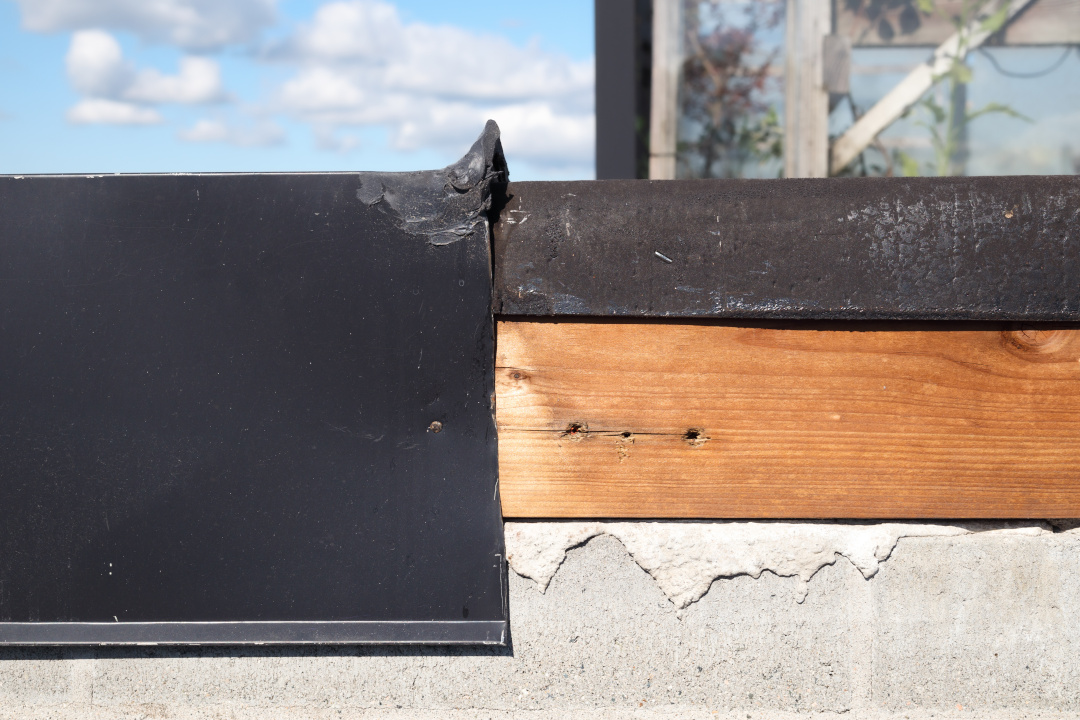
If you are wondering why roof leaks so often show up where the roof meets a wall, chimney, or pipe, the answer is simple: on shingle roofs, those are the places where water flow gets interrupted. A roof system is supposed to shed water by gravity in a layered, “shingle-fashion” sequence, but transitions concentrate runoff and depend on correctly installed flashing to push water back out onto the roof and into the gutter. When that detail is missing, undersized, reverse-lapped, or poorly integrated, leaks often start there first.
Why transitions are the weak spots on shingle roofs
On asphalt shingle roofs, the most leak-prone areas are usually roof-to-wall intersections with step and kick-out flashing, chimney flashing assemblies, and roof penetrations such as vent pipes. These details matter because they sit right where large volumes of water are redirected. At the lower end of a wall intersection, a missing or undersized kick-out flashing can let runoff dump behind siding instead of into the gutter. That is one reason so many leaks begin where the wall and roof edge meet.
| Transition area | Why leaks start there | Common failure |
| Roof-to-wall intersection | Water is concentrated along the wall line | Missing step flashing, no kick-out flashing, bad laps |
| Chimney sides and back | Water slows, piles up, and changes direction | Poor counterflashing, caulk-only repairs, no cricket on wider chimneys |
| Vent pipes / pipe boots | Penetration breaks the roof surface | Cracked collar, loose flashing, aging rubber |
| Eaves near wall terminations | Runoff has to exit cleanly into gutter | Water driven behind siding or behind edge metal |
This pattern is consistent with GAF’s technical guidance, which states that poorly manufactured and installed flashings are the number-one cause of roof leaks, and with Building America guidance, which notes that flashing is required at all roof-wall intersections and must be integrated with the wall and roof drainage planes.
The most common causes of flashing failure
First, there is workmanship. Flashing is detail work, and bad roofers often get the details wrong from day one. On shingle roofs, step flashing should be interwoven with each course and sized correctly; the IRC-referenced guidance summarized by Building America calls for sidewall flashing that is at least 4 inches high and 4 inches wide, while GAF emphasizes proper step flashing and counterflashing at roof-to-sidewall transitions.
Second, the whole system only works if water can keep moving down and out. If a corner, wall return, or overlap is wrong, water stops following gravity and starts working behind the materials. DOE/Building America describes the core rule clearly: roof water management depends on layers that shed water downward and outward, while IIBEC warns that inadequate lap and dysfunctional counterflashing details can result in water intrusion and damage.
Third, flashing areas move and age. Chimneys and roofs can move differently over time, and the American Society of Home Inspectors notes that chimney flashing damage can result from differential movement, mortar deterioration, and loose flashings. Around pipes, material selection matters too. Oatey highlights self-sealing flashing designs that reduce dependence on caulking, and their materials include metal, thermoplastic, and other weather-resistant options used for watertight seals.
Why caulk-only fixes usually do not hold up
Caulk has a place in roofing, but it is not the primary waterproofing strategy. Coastal construction guidance from the Town of Southern Shores specifically says not to rely on sealant as a substitute for proper lapping. That lines up with what we see in the field: if a flashing repair depends mainly on exposed caulk instead of correctly layered metal or properly integrated pipe flashing, it is usually a short-term patch, not a durable solution.
When to call Enterprise Roofing
If you see stains near a chimney, leaks where a roof meets siding, cracked pipe boots, rusted flashing, or heavy beads of roofing cement smeared over transition details, it is time for a closer inspection. At Enterprise Roofing, we repair and replace shingle-roof flashing details the right way, so water is directed where it belongs instead of into your home. To request service, schedule an inspection, or discuss repair versus replacement, contact us through our on-site contact form.
Jun. 03, 2026
How Trees Affect Roof Life: Pruning, Leaves & Debris Best Practices
May. 21, 2026
Roof Flashing Failures: Why So Many Leaks Start at Transitions

May. 07, 2026
The Effects of UV Radiation on Roofing Materials
Apr. 22, 2026
Why a Roof Warranty Isn’t Enough
Apr. 07, 2026