
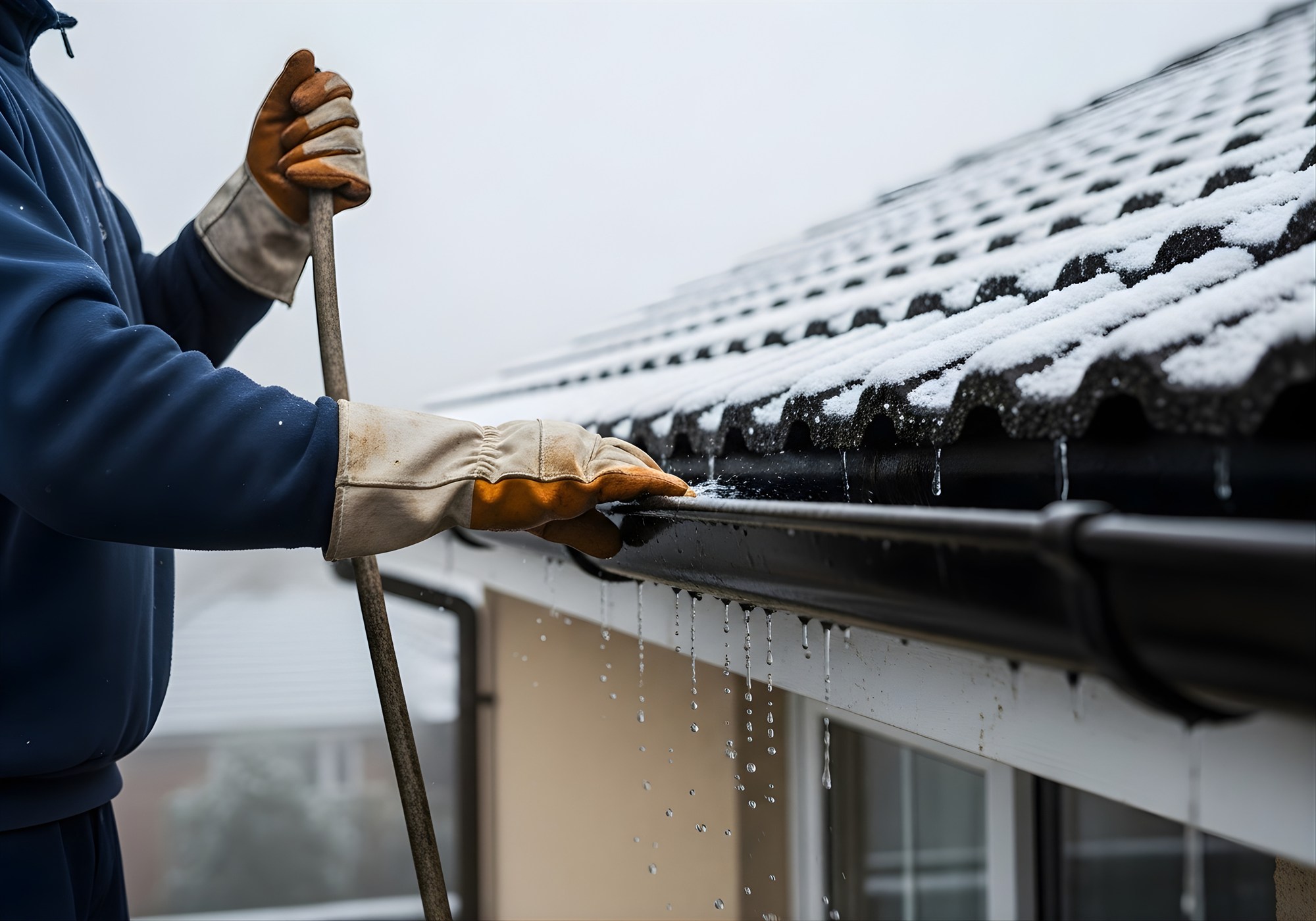
Winter freeze and spring thaw cycles damage roofs by melting snow and ice during warmer hours, allowing water work into small gaps, when temperatures drop again, that water refreezes. That repeated expansion can open seams, loosen flashing, force water under shingles, stress low-slope membranes, and clog gutters until leaks show up inside the house.
Why Freeze-Thaw Damage Happens
As the U.S. Geological Survey notes, ice becomes about 9% less dense than liquid water when it freezes, which is why trapped moisture expands and pushes against roofing materials.
The University of Minnesota Extension explains, ice dams form when upper roof sections are warm enough to melt snow while the colder eaves stay below freezing. Once that meltwater is blocked at the roof edge, it can back up under the roof covering and into the attic or wall system.
The Damage We See Most Often
The most common freeze-thaw problems affect both flat and sloped roofs, just in different ways. Low-slope systems are especially vulnerable at seams, penetrations, and fasteners, while steeper roofs tend to fail first at the eaves, flashing lines, and gutters.
| Problem | What’s happening | What you may notice |
| Seams and seals crack open | Meltwater gets into tiny gaps, then refreezes and widens them | Leaks near vents, chimneys, skylights, or wall intersections |
| Decking and structure get stressed | Heavy ice, trapped moisture, and repeated expansion put pressure on attachment points and roof components | Soft spots, popped fasteners, uneven areas, interior cracks or stains |
| Gutters clog and compact | Ice, granules, leaves, twigs, and winter debris slide down and pack into gutters and downspouts | Overflow, sagging gutters, icicles, poor drainage |
| Roof-edge parts get torn loose | Sliding ice can wrench gutters, trim, flashing, guards, and nearby fixtures out of place | Bent metal, loose gutters, damaged fascia or edge accessories |
These patterns line up with what IIBEC notes about cracking near membrane welds and fasteners in freeze-thaw conditions, what GAF describes as gutter, flashing, shingle, membrane, and decking, and what the MIIA freeze-thaw advisory identifies as structural stress, membrane damage, and drainage-system problems.
Why Spring Is When Problems Show Up
By the time winter ends, your gutters may be holding more than leaves. Snow, ice, shingle granules, and roof debris get pushed downslope all season and then compact inside the troughs and downspouts.
That is why spring gutter cleaning matters so much. The National Weather Service advises clearing gutters and downspouts so melting roof snow can drain properly, and US Department of Energy guidance notes that ice dams in roof gutters can drive water under shingles and into the home.
Spring is also when hidden moisture becomes visible: stained ceilings, damp insulation, warped fascia, mold, mildew, and peeling paint near the eaves. If snow or ice piled high enough to touch areas it normally would not, that runoff can carry extra debris into the gutter system and increase the chance of overflow or roof edge damage during the thaw.
What to Do Next
If your roof went through a rough winter, do not wait for the next hard rain to confirm the damage. At Enterprise Roofing, we recommend a spring inspection, prompt gutter cleaning, and professional repairs before small seam failures, drainage issues, or flashing gaps turn into interior leaks.
To schedule service, use our contact form. We can inspect your roof, identify freeze-thaw damage on flat or sloped systems, and help you fix the problem right the first time.
Jun. 03, 2026
How Trees Affect Roof Life: Pruning, Leaves & Debris Best Practices
May. 21, 2026
Roof Flashing Failures: Why So Many Leaks Start at Transitions
May. 07, 2026
The Effects of UV Radiation on Roofing Materials
Apr. 22, 2026
Why a Roof Warranty Isn’t Enough
Apr. 07, 2026