UV radiation is one of the primary causes of roof aging. Over time, constant sun exposure breaks down roofing materials, dries them out, and accelerates cracking and surface wear. On residential homes, the sun is what does the most damage—especially on south- and west-facing slopes that absorb the most afternoon heat. If left unaddressed, UV-related deterioration can significantly shorten a roof’s service life.
At Enterprise Roofing, we regularly see the long-term effects of sun exposure across the Dayton and Miami Valley area, particularly on aging asphalt shingle systems.
How UV Radiation Breaks Down Roofing Materials
Ultraviolet (UV) radiation is a high-energy component of sunlight that degrades exposed materials at a molecular level. According to the U.S. Forest Service, prolonged exposure to sunlight and heat steadily deteriorates roofing materials, with higher temperatures accelerating chemical breakdown. Similarly, research from Lawrence Berkeley National Laboratory notes that UV initiates degradation processes while heat intensifies them.
In practical roofing terms, this means:
- Surface layers weaken first
- Protective coatings or granules begin to fail
- The underlying material becomes exposed
- Drying, brittleness, and cracking follow
Why Asphalt Shingle Roofs Perform Well
Shingle roofs are better suited to handle UV exposure compared to many other residential systems, largely because of their protective mineral granules.
The Asphalt Roofing Manufacturers Association explains that these granules shield the asphalt layer from UV radiation, moisture, and environmental exposure. Without this granular layer, the asphalt binder would degrade much faster.
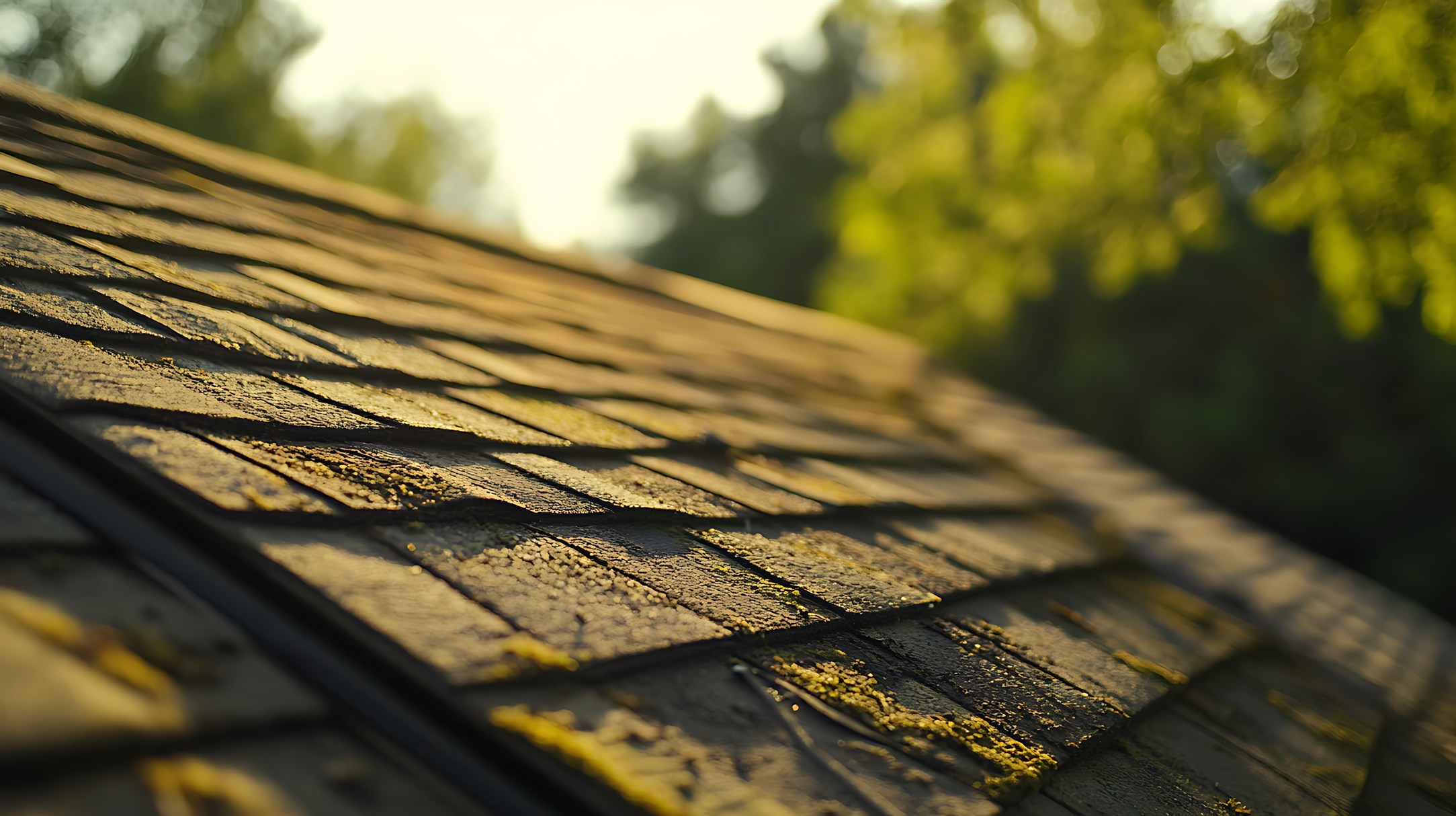
However, aging eventually leads to granule loss. When shingles lose granules:
- The asphalt underneath becomes exposed
- The asphalt begins to dry out
- Flexibility decreases
- Cracking and splitting can occur
Some early granule loss is normal after installation. But widespread bald spots, heavy granule accumulation in gutters, or visible cracking are indicators that UV deterioration is advancing.
What UV Damage Looks Like by Material
| Roofing Material | Primary UV Effect | What We Look For During Inspection |
| Asphalt Shingles | Granule loss, drying, cracking | Bare spots, brittleness, curling edges |
| Metal Roofing | Coating fade or chalking | Surface coating wear, potential corrosion exposure |
| Single-Ply Membranes | Polymer surface breakdown | Shrinkage, seam stress, surface fatigue |
| Spray Foam | Coating erosion | Exposed foam, accelerated degradation |
Regardless of material, UV damage begins at the surface and works inward.
The Sun vs. Attic Temperature: A Common Misconception
Many homeowners assume direct sunlight is what makes their attic excessively hot. In reality, attic temperature is far more influenced by ventilation and insulation performance than by UV radiation itself.
According to Pacific Northwest National Laboratory, proper air sealing, insulation, and ventilation are critical in controlling attic heat gain. The U.S. Department of Energy also notes that reflective roofing can reduce absorbed heat, but ventilation remains a key factor.
In other words:
- UV radiation primarily affects roofing material durability.
- Ventilation and insulation primarily affect attic temperature.
When we evaluate a roof at Enterprise, we assess both the roofing surface and the attic system to ensure the entire assembly is functioning properly.
When to Schedule an Inspection
UV damage progresses gradually. The warning signs typically include:
- Excessive granule loss
- Surface cracking
- Curling or brittle shingles
- Uneven fading between roof slopes
If your roof is over 15–20 years old, or if you are noticing these symptoms, it is prudent to have it professionally evaluated before small issues develop into leaks or structural concerns.
At Enterprise Roofing, we have worked on over 100,000+ Dayton-area roof projects since 1926. Our third-generation team understands how Midwest sun exposure, seasonal temperature swings, and aging materials interact over decades—not just years.
If you would like a professional assessment of your roof’s condition, we invite you to contact us through our on-site form: https://enterpriserfg.com/contact/
We are here to ensure your roof is secure, durable, and built to protect what matters most—your home.